
"Ethiopia coffee farmers"
4000 article(s) found

Characteristics of flavor and taste of coffee manor in Xidamasha Chiso region of Ethiopia
Coffee is Ethiopia's main economic crop and the country's largest crop export and important industry. It accounts for 60% of Ethiopia's total export value and supports many small farms, as well as sugar, bananas and cotton. It is also Ethiopia's largest and important commodity export crop after oil, and it is also the largest export of Elaraby in Africa, in 1997.

Ethiopian Native species | washed Yega Xuefei G1 | Qianlei, Jietipu Town
Professional coffee knowledge exchange more coffee bean information please follow the coffee workshop (Wechat official account cafe_style) front street boutique coffee recommendation | Guatemala Polsa Pacamara Ethiopia washed Yega Sheffield G1 Jietipu town Qianlei (Ethiopia Yirgacheffe Gedeb Chelchele Washed G1) flavor description: floral fragrance and sweet citrus, orange water
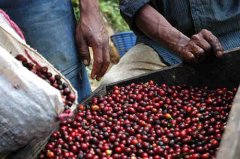
Ethiopia washed Sidamo sidamoG2 boutique coffee beans planting situation, geographical location, climate and altitude
Farmers harvest bright red fruit every day, and every two days the coffee fruit is sent as a unit or sold to a water washing plant for treatment. Coffee fruit without a water treatment plant is usually naturally fermented for about 12 hours, and then passed through the sun for drying and shelling. In any case, farmers always try their best to send it to the water treatment plant for treatment, so that it can be sold in the name of washing treatment.

How to make coffee by hand with washed Ye Jia Xue Fei? Yerga Shefi Kocher G1 Fine Coffee Bean
Professional coffee knowledge exchange more coffee bean information please pay attention to coffee workshop (Weixin Official Accounts cafe_style) washed Ye Jia Xue Fei hand brewed coffee how to drink? Yirgacheffe Gedeb Lot 3 WashedName: Ethiopia Yirgacheffe Gedeb Lot3 WashedG1 Description: Kocher (K)

Detailed Analysis of four cultivation Systems of Coffee in Ethiopia
Forest coffee (Forest Coffee): wild coffee, which accounts for 10% of Ethiopia's national output, is distributed in the wild coffee forest areas of the west and southwest, also known as the Kafa forest. The dense trees here provide the most natural shade for coffee trees and do not need manual care. Mother Earth is in charge of birth, aging, sickness and death, and coffee farmers can go directly to the woodland to harvest. Hansen

Introduction to the flavor of boutique coffee beans in the manor
The bean comes from a single farm, Ethiopia, and is processed by the Waka Cooperative (Worka cooperative). Alemayehu Alako Farm is a member of the Waka Cooperative. The Waka Cooperative, located in the south of Gedeb District, was founded in 2005 and joined the famous Yejia Sheffield Coffee Farmers Cooperative Union (YCFCU,Yirgacheffe Coffee Farmers Cooperati).

Free delivery 2016 to post Ethiopia Yega Xuefei Coffee Bean Vina Fruit Cooperative Wenago
Factory name: Dazhen Coffee Qianjie Cafe location: No. 10 Baoqian Street, Yuexiu District, Guangzhou City, manufacturer contact: 020-38364473 ingredients Table: self-baking shelf life: 90 net content: 227g Packaging: raw and ripe coffee beans in bulk: whether coffee beans contain sugar: sugar-free origin: Ethiopian coffee types: Yega Snow Coffee roasting degree: light roasting Ethiopia Nat

African coffee producing area with charming fruit acids and washed and sun-dried coffee beans of producing area
African coffee flavor characteristics: charming fruit acid as the birthplace of coffee, African coffee in the entire coffee industry in a pivotal position. Although coffee has been commercially grown worldwide for hundreds of years, Africa's vast number of wild coffee varieties remain the greatest treasure trove of coffee researchers today. African coffee is generally characterized by intense aroma and charm

A brief introduction to the characteristics of coffee in Ethiopia, Ethiopia, the largest producer of coffee beans in Africa.
Professional coffee knowledge exchange more coffee bean information please follow the coffee workshop (Wechat official account cafe_style) front street-Ethiopian coffee production Guji producing area profile we now drink a lot of coffee is made of Arabica coffee beans. Ethiopia is not only an important producing area of Arabica coffee beans, but also the largest producer of Arabica coffee beans in Africa.
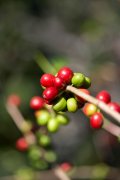
Ethiopian YCFCU washes the Yega flavor of the Yega Sheffidama Cooperative
There are eight major producing areas in Ethiopia: Ekempti, Limu, Illubabor, Djimma, Harrar, Teppi/Bebeka, Sidamo and Yirgacheffe. Yirgacheffe is located in the Gedeo region of southern Ethiopia, and the jurisdiction of this area is better known as Yegashafi and Kochere. Because of Yirgacheffe

Jane of raw coffee beans from Hambela Manor, one of the boutique coffee farms in Ethiopia.
The bean I would like to share with my friends today comes from a family company with a long history in Ethiopia called METAD Agriculture Development PLC, which owns Hambela Coffee Farm. Hambela Manor has countless countries that produce raw bean coffee, but it can be remembered. These are the places where coffee is produced in large quantities.

Ethiopian pastoral coffee cultivation system coffee bean cultivation system distributed in Ethiopia
(photo from: national Geographic Chinese website Photo: Amivitale,Panos) according to Qianjie Coffee Consulting, 90% of coffee in Ethiopia comes from pastoral, forest and semi-forest, but large-scale corporate cultivation is rare in Ethiopia. According to the scale and model, the cultivation of Ethiopian coffee can be divided into four types: 1, forest coffee Forest C

Ethiopia Yega Sheffield Coffee introduces Iron pickup Coffee beans
Even the official research unit of Ethiopia does not know how many Arabica subspecies there are in Ethiopia. The coffee cooperatives in this mountain are certainly different from those planted in another mountain, and even small farmers in the same region grow different varieties of coffee. It has been estimated that there are at least 2000 varieties of Ethiopian coffee and even more than 4500 kinds of coffee. Compared to the southern neighbor

Ethiopia | Jierena Anbayasha Modokale washing Plant sunbathing Yega Xuefei Jin Lena
Professional coffee knowledge exchange more coffee bean information please follow the coffee workshop (Wechat official account cafe_style) Ethiopia | Jierena Anabaya Samodo Caleb washing factory sunbathing Yega Sheffield Jinlena flavor? Gelana Abaya happens to be sandwiched between Lake Abaya Lake in the west and Yejassefi in the east, Lake Ambaya.

Which country has the best coffee beans? The Story of African Coffee beans the flavor characteristics of African coffee
Professional coffee knowledge exchange more coffee bean information please follow the coffee workshop (Wechat official account cafe_style) boutique (single product) coffee bean characteristics: 1. Boutique coffee beans must be high-quality beans with flawless beans. It should have an outstanding flavor, not without a bad taste, but with a particularly good taste. two。 High-quality coffee beans must be excellent varieties, the coffee beans produced

Introduction of Ethiopian Bewaye Cooperative Coffee is the coffee good in Ethiopia?
Professional coffee knowledge exchange more coffee bean information please follow Coffee Workshop (Wechat official account cafe_style) Bewaye Cooperative Bewaye Cooperative Coffee comes from Amara region in the south of Ethiopia's famous Sidamo province. In the mountains between 1900 and 2300 meters above sea level, 1631 farmers grow coffee near their homes. These farmers grow an average of about 0.5 hectares per person.
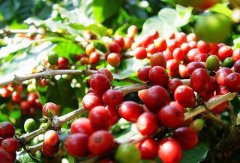
Ethiopian water-washed boutique coffee from the Yega Shirley Fidama Cooperative
There are eight major producing areas in Ethiopia: Ekempti, Limu, Illubabor, Djimma, Harrar, Teppi/Bebeka, Sidamo and Yirgacheffe. Yirgacheffe is located in the Gedeo region of southern Ethiopia, and the jurisdiction of this area is better known as Yegashafi and Kochere. Because of Yirgacheffe
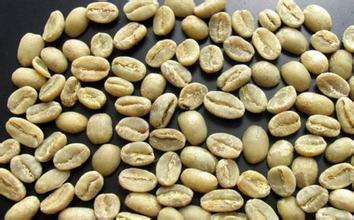
Detailed Analysis of four cultivation Systems in Coffee producing areas of Ethiopia
Forest coffee (Forest Coffee): wild coffee, which accounts for 10% of Ethiopia's national output, is distributed in the wild coffee forest areas of the west and southwest, also known as the Kafa forest. The dense trees here provide the most natural shade for coffee trees and do not need manual care. Mother Earth is in charge of birth, aging, sickness and death, and coffee farmers can go directly to the woodland to harvest. Hansen

Introduction of some of the most special coffee producing areas in Ethiopia introduction of ECX professional evaluation of flavor
For the exchange of professional baristas, please follow the coffee workshop (Wechat official account cafe_style) Ethiopian washed Yega Xuefei G1 Clinique LOT#2 (Ethiopia Yirgacheffe Hanchebe Lot#2 Washed) flavor description: ginger sugar, coffee blossoms, Earl black tea, bergamot, Yoledo green tea, honey sweetness, delicate and changeable acidity, brown sugar tail rhyme. Country of origin: Ethiopia